
Retainer Cleaning Tablets: What to Look for When Buying
Share
by SonicSmile · 5 min read · Retainers & Care
In the pharmacy or online they sit side by side: cleaning tablets for dentures, for retainers, for aligners, for mouthguards. Some cost next to nothing for a pack of twenty, others cost three times as much. And the difference? It's rarely written on the packaging.
The problem: not every tablet is suitable for every appliance. Making the wrong choice risks cloudy aligners, damaged plastic, or a clean that looks effective on the surface but leaves deep-seated bacteria completely untouched. Here's what actually matters.
Why Cheap Universal Tablets Often Fall Short
Most budget cleaning tablets were originally developed for dentures – meaning ceramic, metal or acrylic. Aligners and retainers are made from thermoplastic, a soft, porous material that reacts more sensitively to aggressive ingredients than the hard materials used in dentures.
High concentrations of sodium hypochlorite (bleach) or aggressive oxidising agents can attack the plastic over time, making it cloudy or roughening its surface – which in turn attracts more bacteria. Short-term the retainer looks clean. Long-term the problem gets worse.
In short: A cleaning tablet for retainers needs to be bactericidal and fungicidal, safe for thermoplastic material, free from aggressive bleaching agents, and fully water-soluble — leaving no residue.
The Most Important Buying Criteria at a Glance
These are the criteria a good cleaning tablet for aligners and retainers needs to meet:
| Criterion | What you need | What to avoid |
|---|---|---|
| Efficacy | Bactericidal + fungicidal | Surface fragrances only |
| Material compatibility | Specifically for thermoplastic / aligner plastic | Denture tablets with high bleach content |
| Ingredients | Sodium percarbonate in low concentration | Sodium hypochlorite, chlorine, aggressive acids |
| Soaking time | 5–15 minutes is sufficient | Hours of soaking (unnecessary, stresses material) |
| Residue | Fully water-soluble, no residue | Chemical residue that ends up in your mouth |
| Odour | Neutral or lightly fresh after cleaning | Strong chemical smell that lingers on the retainer |
| Ultrasonic compatibility | Compatible – enhances the effect | Foaming tablets (block the ultrasonic effect) |
What to Pay Close Attention to in the Ingredients
Sodium percarbonate is the most commonly used active ingredient in retainer cleaning tablets — and in low concentrations it's the right choice. When dissolved it releases oxygen that oxidises bacteria and organic deposits without attacking the plastic.
Sodium hypochlorite — chlorine bleach — is common in denture products but problematic for thermoplastic aligners. It can roughen and discolour the plastic surface over time. If you see this ingredient on a packet, the product is not optimised for aligners.
Enzyme-based tablets additionally target protein deposits and biofilm — a benefit that purely chemical tablets don't offer. Anyone who wants maximum hygiene should look for tablets that include enzymes in the formula.
Tablets Alone or Combined with Ultrasonic?
Cleaning tablets work chemically — they dissolve bacteria and deposits from the surface. What they can't do: remove deep-seated biofilm from micro-cracks. That's exactly where ultrasonic cleaning comes in.
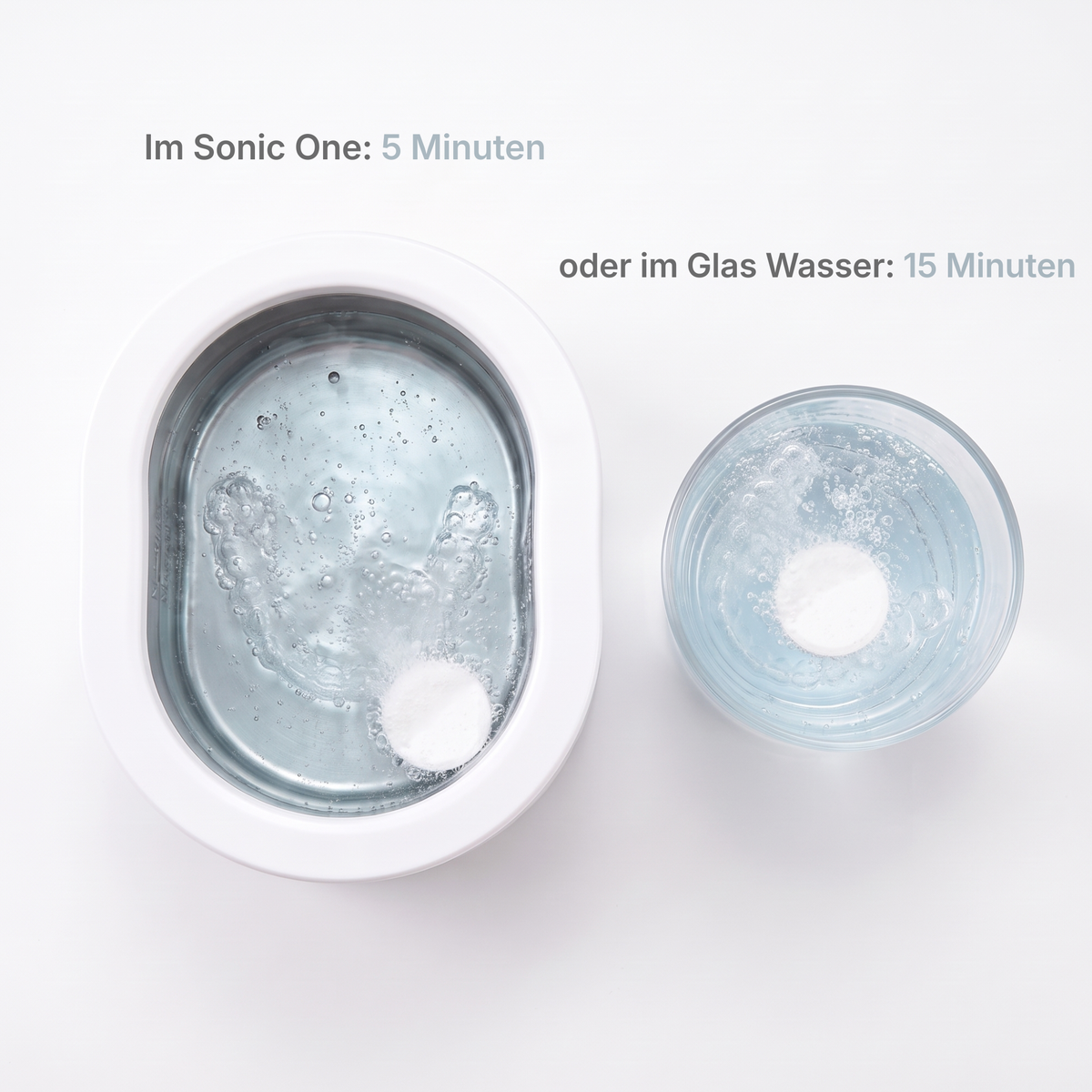
Adding a cleaning tablet directly to the water tank of the Sonic One™ ultrasonic cleaner combines both methods in one step: physical deep cleaning through cavitation and chemical disinfection through the tablet. The result is more thorough than either method alone — and still only takes 3–5 minutes.
Frequently Asked Questions
Can I use denture cleaning tablets for my aligner?
Not recommended. Denture tablets are designed for harder materials like acrylic or ceramic and often contain higher concentrations of bleach or chlorine. These can permanently cloud thermoplastic aligners, roughen the surface and affect the fit over time.
How long should I leave my retainer in the tablet solution?
5 to 15 minutes is sufficient for most tablets. Soaking longer rarely adds any benefit — and with unsuitable products it can put additional stress on the plastic. Follow the instructions on the packaging; with high-quality tablets, 5 minutes is often enough.
How often should I use cleaning tablets?
That depends on whether you use an ultrasonic cleaner. With ultrasonic, once or twice a week is enough since most of the cleaning is already handled physically. Without an ultrasonic cleaner, daily use is recommended for optimal hygiene.
Can I dissolve a tablet in an ultrasonic cleaner?
Yes — and it's actually the most effective combination. Important: avoid heavily foaming tablets, as foam weakens the ultrasonic effect. Low-foam tablets dissolve in the ultrasonic bath and combine chemical and physical cleaning simultaneously.
My retainer has a faint chemical smell after using the tablet – is that normal?
No — that's a sign the tablet is leaving residue or is too aggressively formulated. After cleaning, your retainer should be rinsed briefly under clean water and smell completely neutral. If a chemical odour remains, it's time to switch products.
Our Recommendation
SonicSmile Sterilising Tablets
Specifically developed for thermoplastic aligners, retainers and dental appliances. Bactericidal, fungicidal, free from aggressive bleaching agents, fully water-soluble — and compatible with the Sonic One™ ultrasonic cleaner for the most thorough clean possible.
View Product →